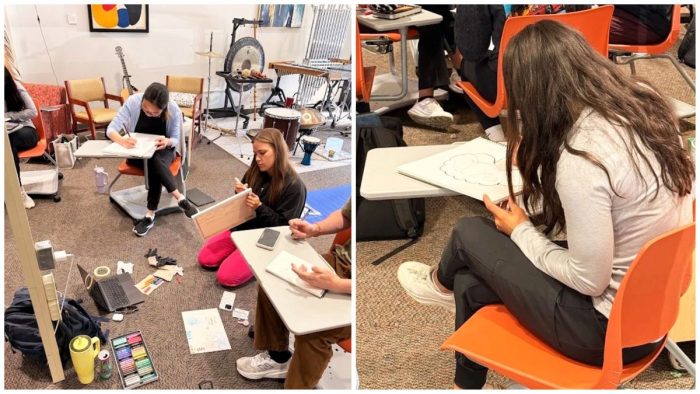
At a national conference, Concordia educators highlighted how the Healthcare & Humanities Lab helps physical therapy students consider care through the eyes of patients and caregivers.
Learning to become a physical therapist includes learning to listen. What matters to a patient? How do they experience illness or injury? What might their caregiver be going through?
At Concordia University Ann Arbor, physical therapy faculty are collaborating with the Healthcare & Humanities Lab to help students consider those questions throughout their education.
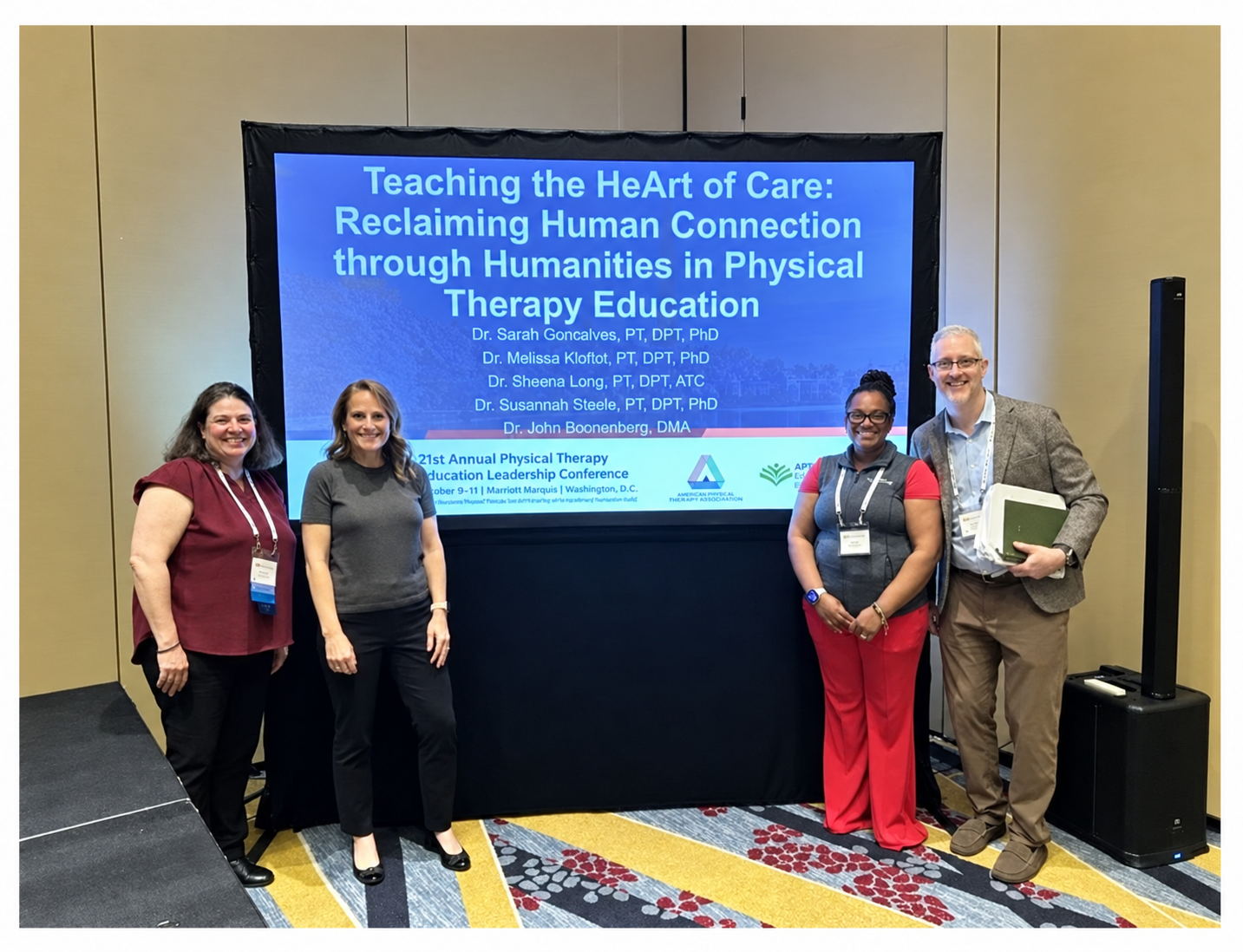
Faculty shared that work Oct. 16 at the 2026 Physical Therapy Education Leadership Conference in Washington, D.C. The conference brought together physical therapy educators from across the country to exchange ideas and advance education in the profession.
Their presentation was titled “Teaching the HeArt of Care: Reclaiming Human Connection Through Humanities in Physical Therapy Education.” It explored how lab experiences helped students develop empathy, build positive relationships with patients and understand disease and healing from a different perspective.
The presentation team included Drs. Sarah Goncalves, Melissa Kieffer, Sheena Long and Susannah L. Steele from CUAA’s PT program, along with Dr. John Boonenberg, director of the Healthcare & Humanities Lab.
“The humanities invite our students to pause, listen and consider what illness or injury feels like from the patient’s perspective,” said Steele, CUAA’s PT program director. “That kind of reflection is essential in physical therapy because healing happens within a person’s life, relationships and sense of identity. I hope our students carry forward the ability to see beyond impairments and partner with patients in ways that honor their whole story.”
Seeing the whole patient
CUAA’s Healthcare & Humanities Lab brings literature, philosophy, theology, ethics and the arts into healthcare education. These disciplines give students additional ways to explore the human experiences involved in receiving and providing care.
Within the program’s curriculum, the collaboration is intended to help students develop the personal and interpersonal skills they will use alongside their clinical knowledge.
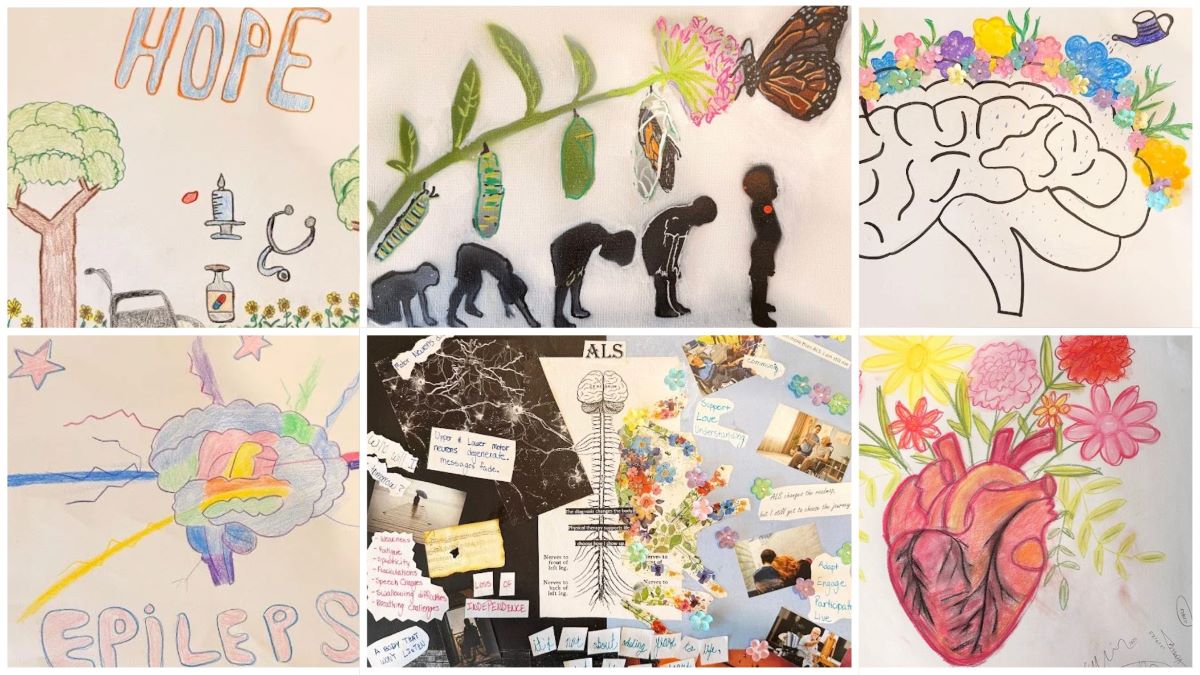
One activity, “Neuromuscular Lenses Through Art,” challenged second-year Doctor of Physical Therapy students in Neuromuscular I to consider how a neuromuscular condition affects a person’s daily life.
Students created visual art exploring a chosen condition, its impact on everyday activities and life roles, and how physical therapy can bring hope. Their work depicted more than symptoms or impairments. It offered a way to consider the person living with them.
Third-year CUAA DPT student Joelle LaForce sees a connection between the lab’s activities and listening to patients. “When we’re talking to a patient in the clinic, they are telling us their experience,” LaForce said. “The lab helps us figure out ‘What is someone dealing with? How would I feel in this position?’ It’s like stepping into these people’s lives.”
Boonenberg, who also serves as Kreft Endowed Chair in Music, said the humanities help future physical therapists understand the emotional, social and personal dimensions of illness.
“For example, in our cancer rehabilitation class, students studied patient and caregiver art, poetry, music and reflection to explore how cancer affects identity, relationships and a person’s sense of self,” Boonenberg said. “We want students to recognize that rehabilitation isn’t just about restoring function—it’s about caring for the whole person—mind, body and spirit.”
Want in?
Concordia University Ann Arbor is a Lutheran higher education community committed to helping students develop in mind, body and spirit for service to Christ in the Church and the world.
Click here to view a full list of the programs.